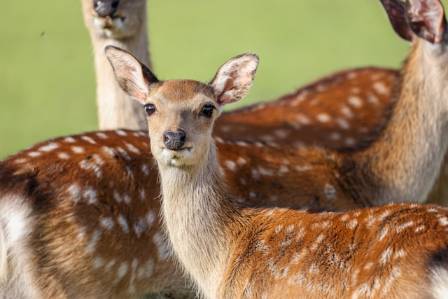
The Japanese sika deer (Cervus nippon nippon) stands as one of the most adaptable and biologically significant subspecies of sika deer, native to the forested landscapes of Japan. Renowned for its striking appearance and complex behavioral patterns, this small deer has not only shaped the ecosystems of its native habitat but also left a lasting mark on human culture and global conservation efforts. While its population thrives in Japan, its introduction to other continents has sparked both ecological challenges and innovative conservation solutions, making it a species of great interest to biologists, ecologists, and cultural historians alike.
Taxonomy and Distribution: A Thriving Subspecies
As the most widespread and abundant subspecies of sika deer (Cervus nippon), the Japanese sika deer is endemic to the Japanese archipelago, where it inhabits a range of habitats from temperate forests and mountainous regions to coastal woodlands across Honshu, Kyushu, Shikoku, and numerous smaller islands. Over the past century, its population has experienced a steady increase, driven by factors such as reduced predation (natural predators like wolves have been extirpated from Japan), 适应性 to human-altered landscapes, and effective wildlife management policies. Beyond its native range, the Japanese sika deer has been introduced to Europe, North America, and New Zealand since the 19th century, where feral populations have established themselves in countries like France, the United Kingdom, and the United States. However, this global spread has not been without consequences—particularly in France, where established populations in forests such as the Loire Valley and the Massif Central pose a significant risk of hybridization with native red deer (Cervus elaphus), threatening the genetic integrity of both species.
Social Structure and Reproductive Behavior
The Japanese sika deer exhibits a distinct social organization centered around gender-based grouping. Females form stable herds consisting of adult females, their current offspring, and often yearlings from the previous breeding season. These herds provide protection for young deer and facilitate cooperative foraging, with members maintaining close social bonds through subtle vocalizations and physical contact. In contrast, adult males are predominantly solitary for most of the year, wandering across larger home ranges in search of food and potential mates. This solitary behavior is interrupted each autumn, when the rutting (breeding) season begins. During this period, males undergo dramatic behavioral changes: they establish and vigorously defend territories by urinating on trees and vegetation (a behavior known as “scent marking”) to signal dominance and attract females. Competition for mates is fierce, with males engaging in violent battles using their antlers to clash with rivals. These fights can result in serious injuries, and the defeated males are forced to retreat to the periphery of dominant males’ territories, while the victors gain exclusive access to breeding females within their domain.
Diet and Activity Patterns: Adaptations for Survival
The Japanese sika deer is a herbivorous species with a highly varied diet, though it shows a strong preference for certain plant species. Unlike many other deer, which are primarily diurnal (active during the day), sika deer are crepuscular and nocturnal, foraging primarily from dusk to dawn. This activity pattern helps them avoid extreme temperatures during the day and reduces their exposure to potential predators. Their diet includes over 100 different plant species, ranging from grasses, herbs, and shrubs to the bark and twigs of young trees. Notably, bamboo constitutes up to 80% of their diet in regions where it is abundant, a testament to their ability to digest tough, fibrous plant material. This specialized feeding adaptation allows them to exploit ecological niches that other herbivores may overlook, contributing to their success in diverse habitats. Sika deer are also highly selective feeders, choosing the most nutritious parts of plants (such as young leaves and shoots) to maximize their energy intake, especially during critical periods like the rutting season and winter.
Distinctive Features: Seasonal Transformations
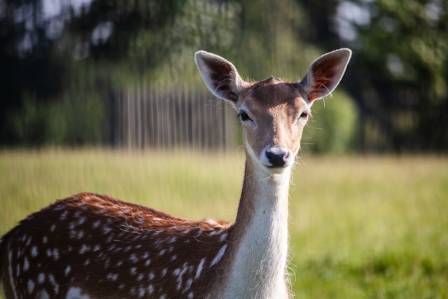
One of the most striking characteristics of the Japanese sika deer is its seasonal coat variation, which serves both camouflage and thermoregulatory purposes. In summer, the deer’s coat is a rich reddish-brown color, adorned with numerous white spots that blend seamlessly with the dappled sunlight filtering through forest canopies, providing effective camouflage from predators. As autumn transitions to winter, the coat undergoes a dramatic change: the spots fade completely, and the fur darkens to a deep brown or black, helping the deer absorb heat and remain inconspicuous in bare, snow-dusted landscapes. Only the rump and tail retain their white coloration, which may serve as a visual signal to other herd members during flight or social interactions. Males are further distinguished by their antlers, which are sparsely branched (typically with 3-4 tines on each side) and can grow up to 60 centimeters in length—roughly the height of a standard desk. These antlers are shed and regrown annually, with new growth beginning in spring and reaching full size by autumn, just in time for the rutting season.
Cultural Significance: A Sacred Animal in Japan
For centuries, the Japanese sika deer has held a revered place in Japanese culture, regarded as a protector of cities and a messenger of the gods. This sacred status is deeply rooted in Shintoism, Japan’s indigenous religion, where the deer is associated with the sun goddess Amaterasu and is believed to embody divine spirits. Nowhere is this cultural connection more evident than in Nara Park, located in the ancient capital of Nara, where hundreds of wild Japanese sika deer roam freely, interacting with visitors and being fed special “shika senbei” (deer crackers). These deer are considered living symbols of the city’s spiritual heritage, and harming them is strictly prohibited. The deer’s gentle demeanor and association with tranquility have also made it a popular motif in Japanese art, literature, and poetry, appearing in traditional woodblock prints, haikus, and modern media. Beyond Japan, the deer’s cultural significance has waned, but its striking appearance and gentle nature continue to make it a favorite among wildlife enthusiasts worldwide.
Global Introduction and Ecological Impacts
The Japanese sika deer’s journey beyond Japan began in the 19th century, when European colonizers, hunters, and zoological gardens imported the species for its prized meat, decorative antlers, and exotic appeal. In countries like France, the United Kingdom, and New Zealand, small groups of sika deer escaped from captivity or were intentionally released into the wild, where they quickly adapted to local ecosystems. While their presence has added biodiversity in some areas, it has also led to significant ecological challenges. In France, the most pressing issue is hybridization with native red deer. As sika deer and red deer share similar habitats and breeding seasons, interbreeding has become increasingly common, resulting in hybrid offspring that carry genes from both species. This “genetic pollution” threatens the genetic purity of France’s native red deer populations, which are already facing pressure from habitat loss and fragmentation. Additionally, sika deer’s voracious appetite for vegetation can lead to overgrazing, damaging forests, agricultural crops, and rare plant species, and their high population densities can outcompete native wildlife for resources.
Conservation Role: Surrogate Mothers for Endangered Subspecies
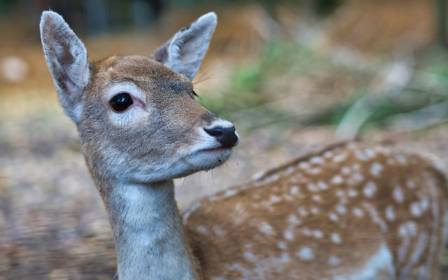
Despite the ecological challenges posed by its introduction to non-native ranges, the Japanese sika deer has emerged as a beacon of hope for the conservation of other endangered sika deer subspecies. Many sika deer subspecies, such as the Vietnamese sika deer (Cervus nippon pseudaxis) and the Formosan sika deer (Cervus nippon taiwanensis), are critically endangered due to habitat destruction, poaching, and human-wildlife conflict, with some populations numbering fewer than 100 individuals in the wild. To address this crisis, conservationists at the Haute-Touche Zoological Reserve in France have launched an innovative assisted reproduction program, leveraging the Japanese sika deer’s adaptability and reproductive health. In this program, Japanese sika deer serve as surrogate mothers, receiving embryos from endangered subspecies via embryo transfer. This technique allows conservationists to bypass the low reproductive rates and high mortality risks of endangered females, increasing the chances of successful births. The ultimate goal of the program is to produce a sufficient number of healthy, genetically pure individuals to support reintroduction efforts in the native habitats of these endangered subspecies in the coming years, offering a lifeline for species on the brink of extinction.